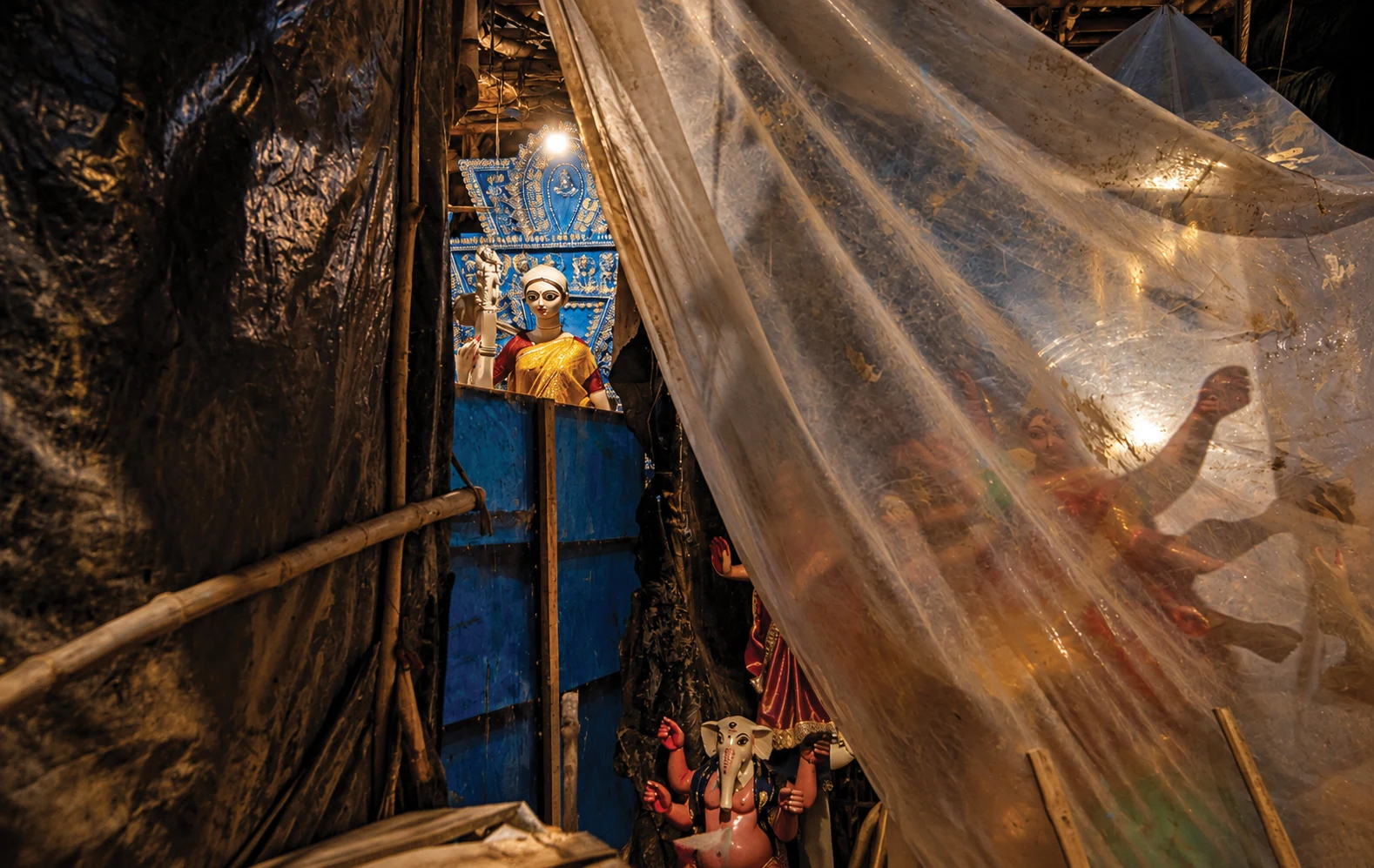
The Hands Behind Durga
The artists whose hands turn clay, straw and imagination into the face of the goddess.
View Series →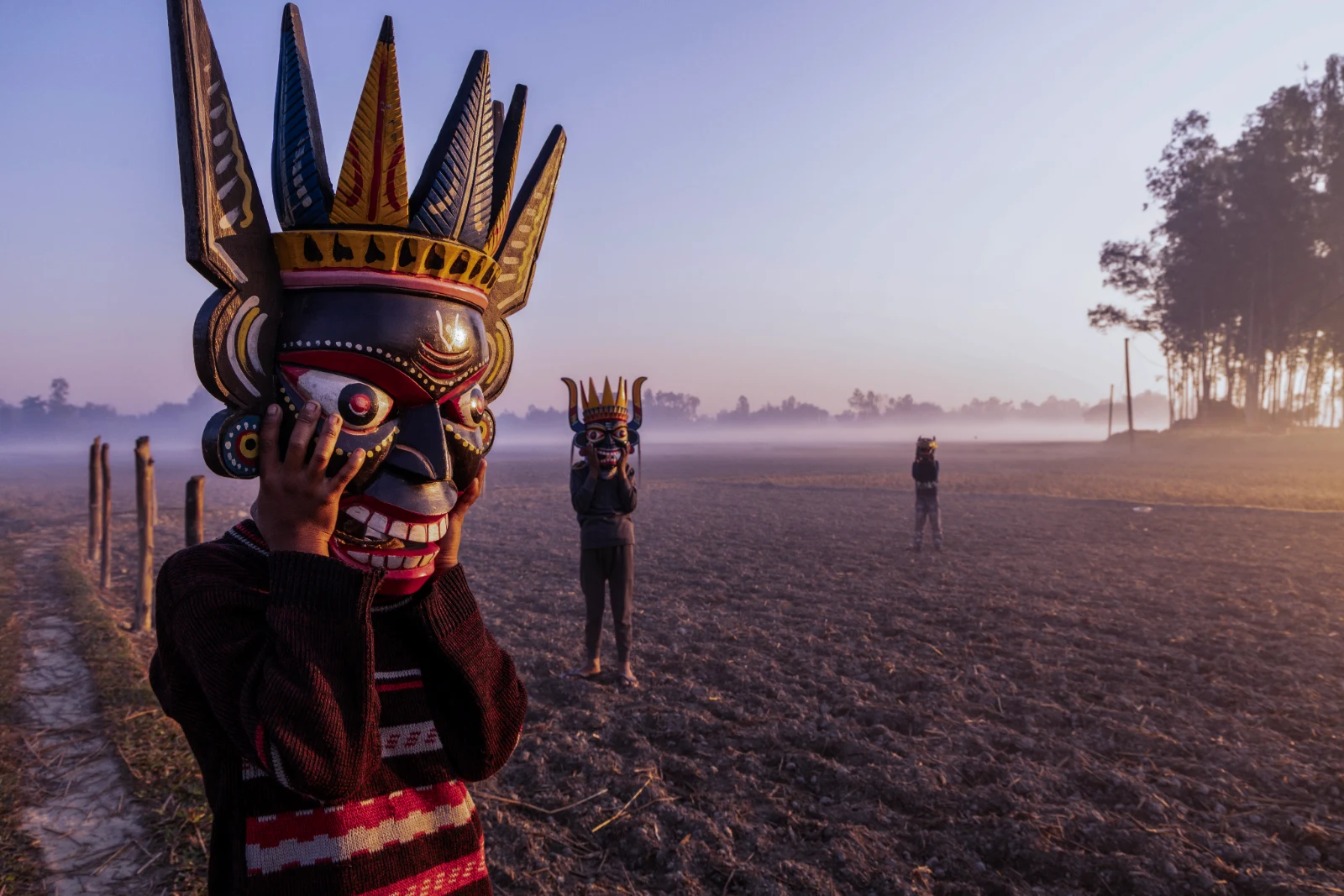
2026
In the quiet villages of North Bengal, when the heat of summer hangs heavy in the air and the fields wait for rain,
About this series
In the quiet villages of North Bengal, when the heat of summer hangs heavy in the air and the fields wait for rain, something ancient wakes up. Drums start thumping. Metal plates clash. Wooden masks—bold, fierce, almost supernatural—come out of hiding. This is Gomira, a ritual masked dance that isn’t just performed, but experienced. It’s loud, raw, chaotic, spiritual, and deeply human all at once. Gomira isn’t stage art. It doesn’t care about perfection or applause. This is about belief. About invoking Adya Shakti, the primordial feminine energy, through movement, rhythm, and masks known locally as mukha. When dancers put on these masks, they’re no longer just villagers—they become vessels. The line between performer and deity blurs. What you’re watching isn’t choreography; it’s possession, devotion, and release. Held between Chaitra Sankranti (April) and the Ashar months (June–July), Gomira has no fixed calendar. Each village decides its own moment. Each troupe carries its own legacy. Once closely tied to Mukha Khel—a more recreational masked performance popular in Cooch Behar and Jalpaiguri—Gomira evolved into something far more ritualistic, surviving while many folk traditions faded into silence. Photographed in Mahishbathan, Dakshin Dinajpur, this photo story by Anjan Ghosh steps inside that living tradition. His lens doesn’t chase spectacle—it waits for the breath between drumbeats, the sweat beneath the mask, the trance in a dancer’s eyes. These images aren’t about nostalgia. They’re proof that Gomira is still breathing, still dancing, still calling the old gods into the present.
More from the portfolio