The Hands Behind Durga
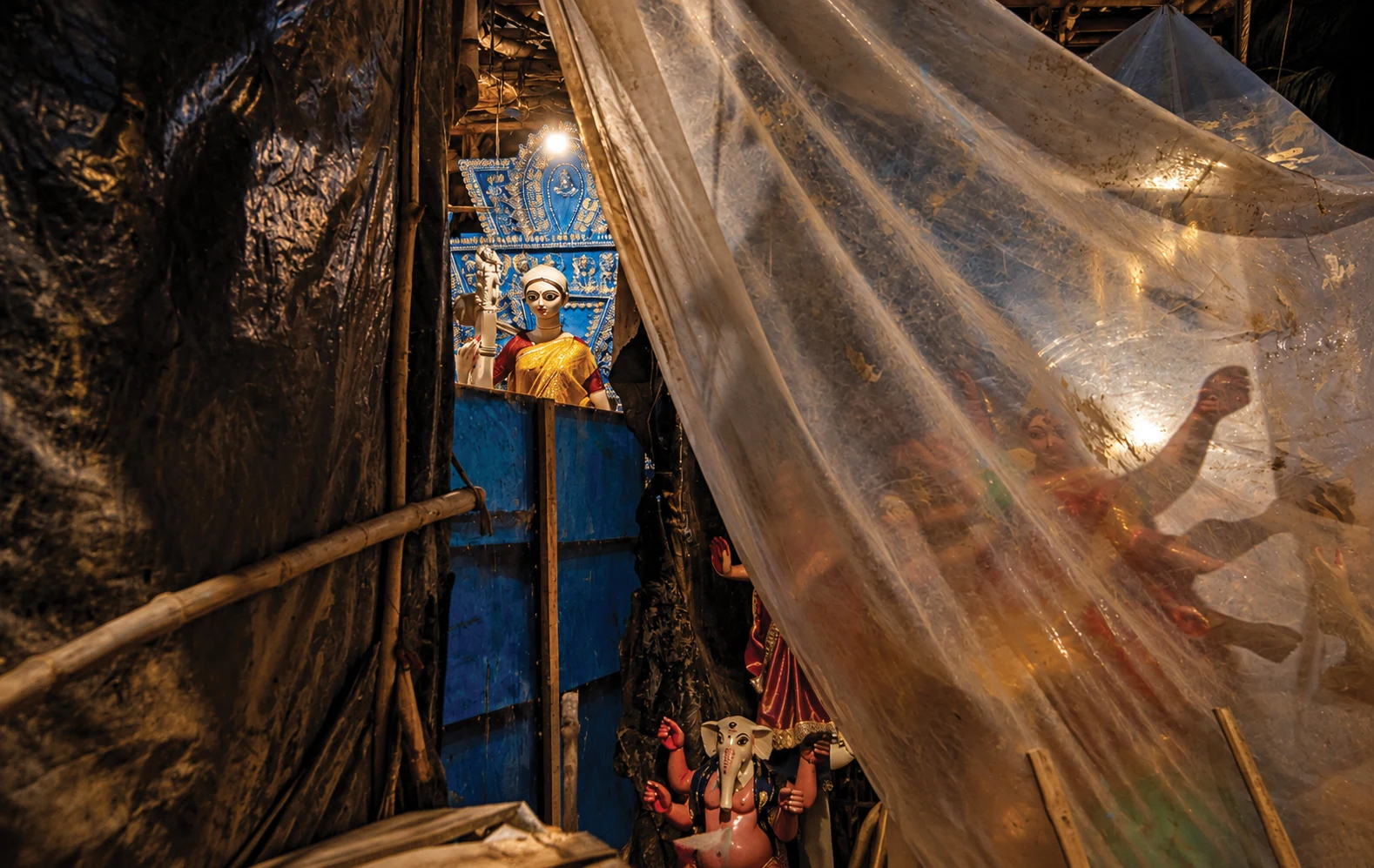
The artists whose hands turn clay, straw and imagination into the face of the goddess.
View Series →
2026 — West Bengal, India
where painting becomes language, tradition stays present, and art grows through shared ground.
About this series
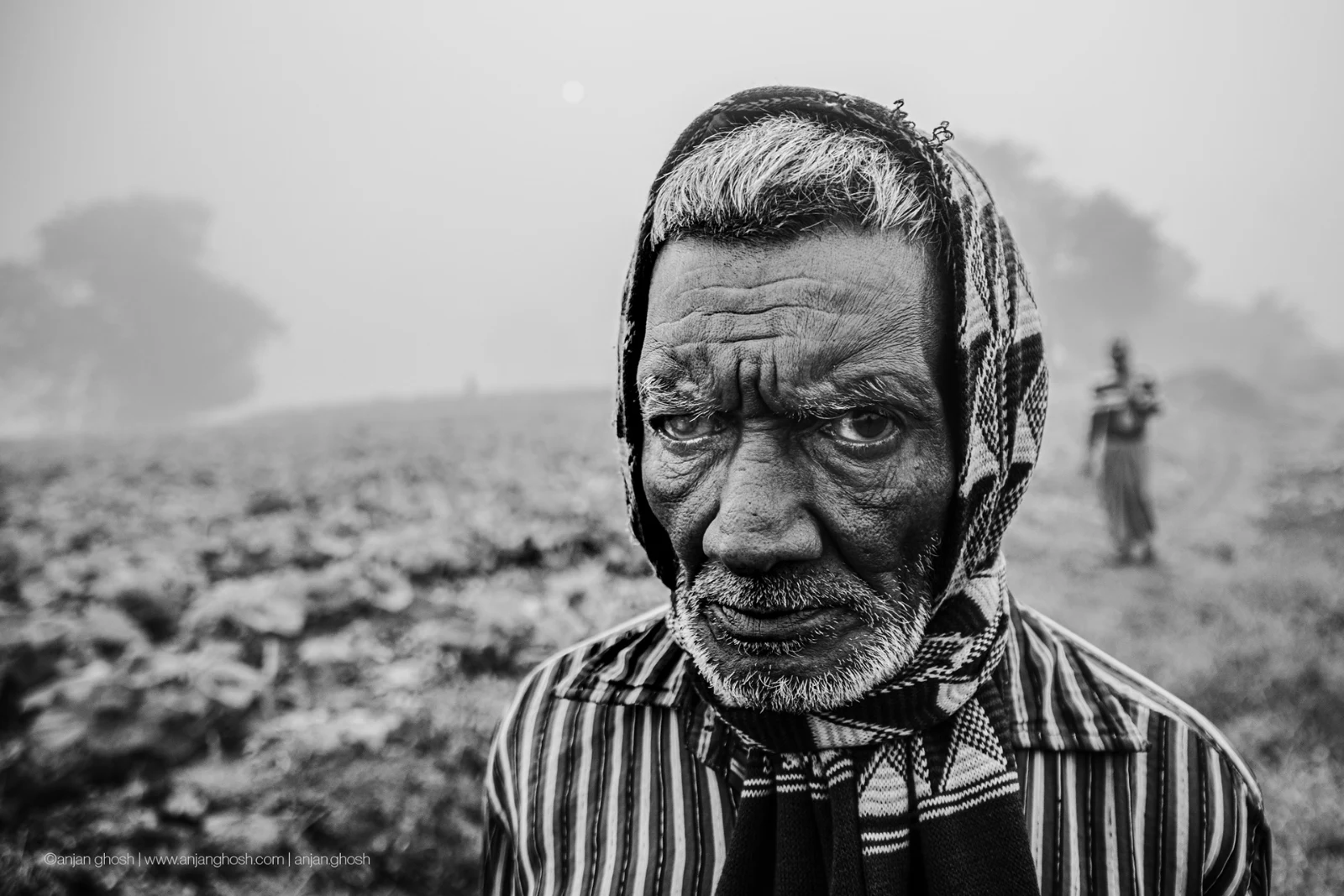
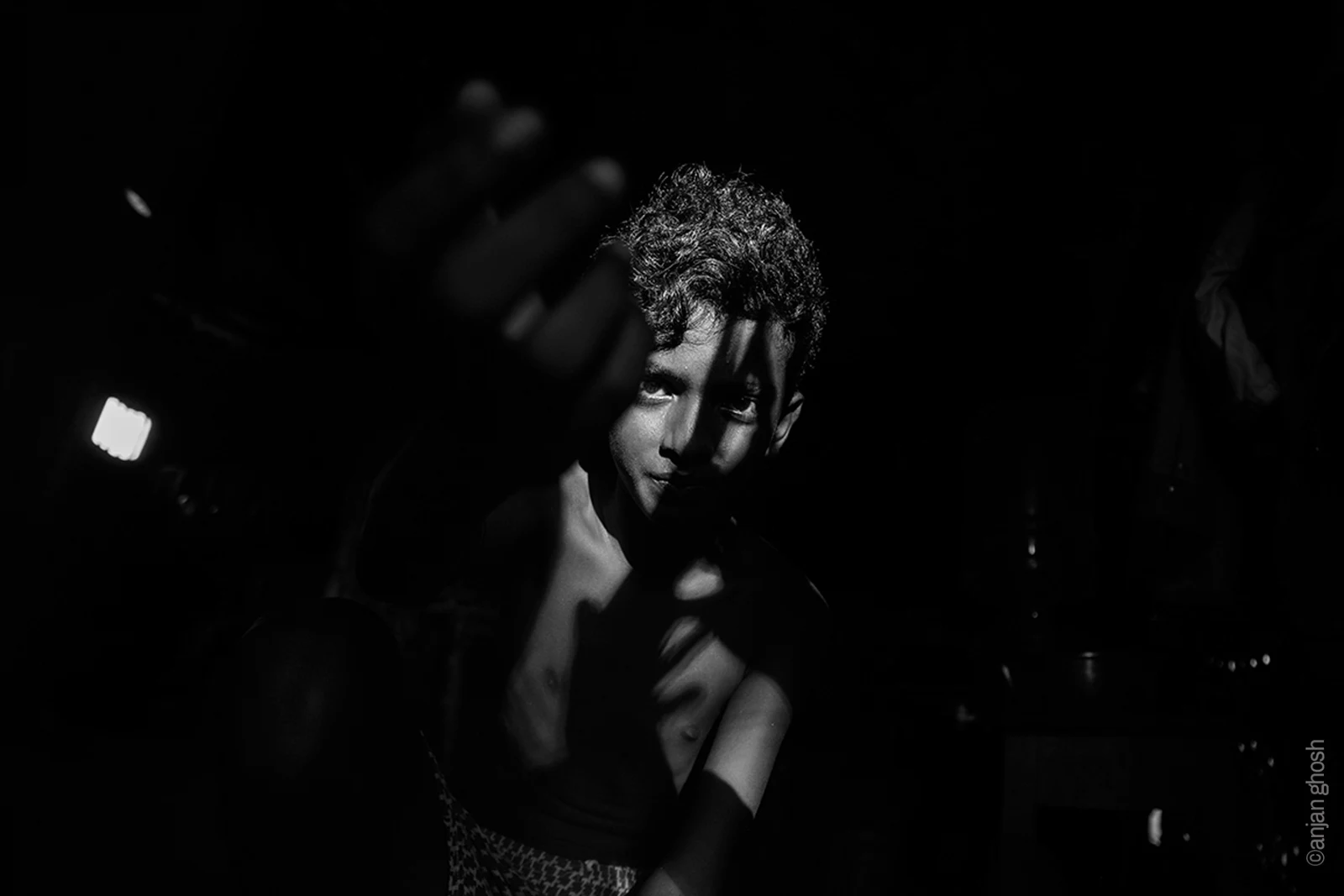
Anjan Ghosh’s photography grows out of a life shaped by movement between worlds, by attention learned slowly, and by a deep familiarity with the places he photographs in India. His work reflects a journey in which looking is inseparable from living, and photography becomes a way of staying close to what has formed him rather than stepping away from it. His photographs carry the weight of lived experience, not as autobiography, but as a quiet grounding force. This story is situated in rural and semi-urban Bengal, unfolding across villages, working landscapes, and transitional spaces shaped by daily survival. It follows Anjan as he moves through these places over time, returning to the same communities as they negotiate change. These are environments positioned between tradition and transformation, where rural and urban realities press against one another without fully merging. Anjan’s photography develops in response to this tension. His photographs do not frame these communities as peripheral or vanishing, but as active sites of continuity and adaptation. Through sustained return to the same regions, he builds a visual language grounded in familiarity, allowing everyday life to surface without emphasis or interruption. What emerges is a sustained effort to bridge distance, not through declaration, but through presence. This story considers photography as a form of listening. It asks what happens when the camera is used not to extract, but to remain; not to define, but to stay open. Within that space, everyday life is neither aestheticized nor diminished. It is allowed to stand, complex and intact
More from the portfolio